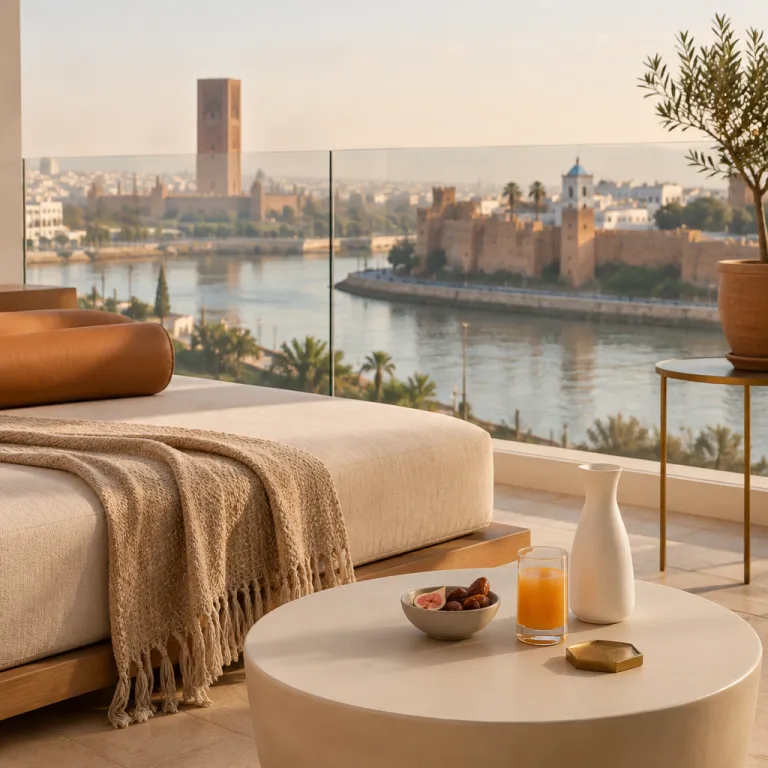
Rabat, Morocco city as an elegant urban retreat
Rabat, Morocco city offers a calm coastal rhythm that suits travelers seeking refined space and privacy. This capital on the Atlantic coast balances diplomatic gravitas with relaxed seaside living, which makes it ideal for luxury and premium condo hotel stays. In the wider Rabat capital region, high end residences increasingly frame the ocean horizon as part of a curated urban retreat experience.
The city Rabat stretches along the Bou Regreg river, facing the historic town of Salé across the water. On one bank, Rabat medina and the royal palace anchor political power, while on the opposite bank Salé preserves a quieter, more traditional character. For guests choosing condo hotels, this dual river landscape creates a rare mix of modern convenience and authentic Moroccan daily life within a compact area.
Rabat Morocco has grown from an almohad fortress into a modern administrative hub with measured, thoughtful planning. The climate is temperate Atlantic, with mild winters and warm summers that rarely feel oppressive. Such a climate allows condo hotel guests to enjoy generous balconies, rooftop pools, and river facing terraces throughout most of the year, often with practical amenities such as in suite kitchenettes, Wi Fi, and secure underground parking.
From almohad walls to modern condo hotels along the Bou Regreg
The story of Rabat Morocco city begins in the twelfth century, when the almohad dynasty built powerful ramparts and the unfinished Hassan Tower above the Bou Regreg river. Today, this same river corridor hosts ambitious waterfront regeneration, where luxury condo hotels rise near the historic site without overshadowing it. Travelers can wake to views of Hassan Tower while enjoying the privacy and space that only a premium condo style residence can provide.
On the Rabat bank, the Kasbah des Oudaias crowns the cliff, its white and blue lanes descending toward the river and the Atlantic. Below, new promenades and marinas reshape urban mobility, linking Rabat medina with Salé through pedestrian bridges and the efficient Salé tramway. For guests, this means a condo hotel in the Bou Regreg area can feel both historic and rabat modern, with quick access to cafés, galleries, and riverfront jogging paths; many properties sit within a 5 to 15 minute walk of tram stops such as Rabat Ville, Hassan II, or Bab Chellah.
Across the water, Salé forms part of the integrated Rabat Salé urban region, which now extends toward the growing Sale Kenitra corridor. Condo hotel investors watch this area closely, just as they follow elevated urban condo style stays in other cities such as cool urban condo style hotels in Portland. For travelers, the benefit is simple; more choice of spacious, serviced residences that frame both the ancient roman traces and the evolving skyline of a national capital, often at nightly rates that range from mid scale options to high end suites depending on view and services.
Rabat medina, royal palace and the art of staying central
Staying near Rabat medina places guests at the heart of city Rabat life, within walking distance of the royal palace and key government ministries. This central area combines arab and French colonial planning, with wide boulevards leading toward Bank Al Maghrib and the main national institutions. For luxury condo hotels, such a location offers both prestige and practical access to tram lines, cafés, and cultural venues.
Many premium residences are built with soundproofing and discreet service corridors, which preserve privacy even in the busiest streets of Rabat Morocco. Guests can step from a quiet condo suite into the vibrant lanes of the medina, then return to a calm interior that feels more like a private apartment than a traditional hotel room. This duality suits business travelers who follow Morocco news closely, as well as leisure guests who want to explore by day and retreat to serenity at night; central units tend to be slightly smaller but compensate with short walking times to offices and ministries.
In the administrative quarter near Mohammed V Avenue, the presence of Bank Al Maghrib, the parliament, and several embassies reinforces the status of Rabat capital as a measured, secure city. Here, urban mobility is supported by tram lines and wide sidewalks, which makes it easy to reach museums, the national theatre, and the main train station on foot. Travelers who appreciate similar refined condo hotel experiences in Asia often compare this central comfort to the elegant urban retreats in Taipei, where location and layout matter as much as décor, especially for guests who value predictable commutes and clear neighborhood structure.
Culture, museums and islamic heritage around Rabat Morocco city
Rabat Morocco city holds a rare concentration of cultural institutions for such a compact urban area. The Mohammed VI Museum of Modern and Contemporary Art, the national archaeological museum, and several smaller galleries form a dense cultural corridor. For condo hotel guests, staying nearby means that a morning coffee can be followed by a short walk to a world class exhibition, with most central museums reachable in 10 to 20 minutes on foot from key tram stops.
The Hassan Tower complex, originally planned as a grand almohad mosque, remains one of the most striking islamic heritage sites in north Africa. Its unfinished columns and the adjacent Mohammed V Mausoleum create a solemn, open air museum of stone and sky. Many luxury residences are built within a short drive of this site, allowing guests to visit at sunrise or sunset when the climate feels gentle and the crowds thin.
Within the Kasbah des Oudaias, the small but atmospheric museum of traditional arts showcases carpets, jewelry, and ceramics that reflect centuries of arab and amazigh craftsmanship. From the kasbah terraces, visitors gaze over the Bou Regreg river toward Salé and the expanding Sale Kenitra axis, where new residential projects reshape the horizon. Condo hotel operators pay close attention to this cultural map, because proximity to a major museum or heritage site often defines the premium value of an urban retreat; UNESCO currently inscribes the “Rabat, Modern Capital and Historic City: a Shared Heritage” ensemble, which includes key monuments and historic quarters rather than a single isolated landmark.
Universities, business travel and the rise of condo hotels
Rabat capital is not only a political center; it is also an academic hub anchored by Mohammed V University and several international institutions. The presence of this university network attracts conferences, research programs, and long stay visitors who often prefer condo hotels over standard rooms. A serviced residence near Mohammed V University or another campus allows guests to combine work, study, and leisure within a single flexible space.
Business travelers linked to ministries, Bank Al Maghrib, and multinational firms based in the city Rabat increasingly seek residences that feel residential rather than transient. They value separate living areas, kitchenettes, and laundry facilities, especially during stays that last several weeks or more. In this context, the condo hotel model mirrors successful projects in other destinations, such as the 328 condo residences presented in the Mondrian Cancun condo residence development, which illustrates how branded serviced apartments can appeal to both investors and long stay guests.
Urban mobility improvements, including the Salé tramway and upgraded road links toward Sale Kenitra, make it easier for guests to commute between academic campuses, business districts, and waterfront leisure zones. Many new projects are built near tram stops such as Bab Chellah or Rabat Ville, which reduces reliance on private cars. For travelers who follow Morocco news about infrastructure and investment, these patterns confirm that Rabat modern planning supports both residents and temporary guests, with predictable journey times between major nodes.
Choosing the right condo hotel area in Rabat Morocco
When selecting a luxury or premium condo hotel in Rabat Morocco city, the first decision concerns area and daily rhythm. Guests who prioritize heritage may choose the Bou Regreg riverfront, close to Hassan Tower, the Kasbah des Oudaias, and the ancient roman remains at Chellah. Those who prefer business convenience often focus on districts near the royal palace, Bank Al Maghrib, and the main tram lines.
Waterfront developments along the Bou Regreg river offer panoramic views toward Salé and the ocean, with easy access to marinas, cafés, and landscaped promenades. These residences suit travelers who enjoy evening walks and outdoor dining in a mild climate, while still staying within a short tram ride of Rabat medina and the administrative core. Families often appreciate such locations because children can play safely along the riverbank while adults enjoy the refined services of a condo style property, from staffed receptions to on site pools and fitness rooms.
Further inland, emerging neighborhoods along the axis toward Sale Kenitra host newer projects that emphasize parking, green spaces, and contemporary design. These areas may feel less historic, yet they often provide larger floor plans and quieter surroundings for extended stays. Whether guests choose a central address or a more residential site, the key is to balance access to museums, universities, and business hubs with the privacy and comfort that define a true urban retreat in Rabat Morocco, while also considering budget, traffic patterns, and preferred walking distances.
Heritage layers and future horizons in Rabat capital
Rabat capital carries visible traces of many eras, from ancient roman ruins at Chellah to almohad fortifications and modern government buildings. This layered cityscape shapes how condo hotels are built, because new projects must respect protected views toward Hassan Tower and the royal palace. For travelers, the result is a skyline where no single tower dominates, and where the river and ocean remain constant reference points.
Within the Kasbah des Oudaias, legends speak of Qubbat Sidi Mansour and other shrines, sometimes abbreviated locally as Qub Mansur, which remind visitors that spiritual life still permeates the old city. Nearby, smaller mosques linked to figures such as Abd al Mumin, often shortened in oral tradition to Abd Min, echo the deep islamic history of Rabat and Salé. While these names rarely appear in mainstream Morocco news, they form part of the cultural fabric that attentive guests notice during longer stays.
Looking ahead, urban mobility projects, waterfront regeneration, and university expansion will continue to shape the Rabat Salé metropolitan area. Condo hotel developers monitor these shifts carefully, aligning new residences with tram lines, cultural corridors, and business clusters. For travelers choosing Rabat Morocco city as their base in north Africa, this means an expanding range of refined, apartment style stays that frame both the historic core and the evolving horizons of a national capital.
Key figures on Rabat, Morocco city and tourism
- Rabat Salé Kénitra region welcomed more than 1.7 million tourist overnight stays in a recent pre pandemic year, according to the Moroccan Ministry of Tourism (data reported for 2019), highlighting the city’s growing role as a leisure and business hub; travelers can consult official tourism statistics portals for updated figures.
- The Rabat Salé tramway network extends over roughly 27 km with dozens of stations, based on operator data published in the late 2010s, which significantly improves urban mobility between the two banks of the Bou Regreg river and key districts such as Agdal and Hay Riad.
- The Kasbah des Oudaias, Hassan Tower, and Chellah lie within the wider “Rabat, Modern Capital and Historic City: a Shared Heritage” ensemble inscribed on the UNESCO World Heritage List, underlining the density of heritage landmarks within a compact urban area while clarifying that the designation covers a broader urban landscape.
- Mohammed V University in Rabat enrolls tens of thousands of students across multiple campuses, according to university statistics released in recent academic years, which sustains strong demand for extended stay accommodation and serviced residences close to tram lines and bus corridors.
- Average summer temperatures in Rabat typically range between 18 °C and 26 °C, based on national meteorological data for the 1991–2020 reference period, making the climate milder than many inland Moroccan cities and attractive for year round travel and outdoor riverfront activities.
FAQ about Rabat, Morocco city condo hotel stays
Is Rabat, Morocco city a good base for first time visitors ?
Rabat Morocco city is an excellent base because it combines a calm atmosphere with major sights such as Hassan Tower, the Kasbah des Oudaias, and Chellah. The city offers reliable urban mobility through the tramway and trains, which makes day trips to Casablanca or the Sale Kenitra corridor straightforward. Many travelers appreciate starting their Morocco journey here before moving on to more intense destinations, especially when they can settle into a condo style suite for three or more nights.
Which areas are best for luxury condo hotels in Rabat capital ?
The most sought after areas include the Bou Regreg riverfront, the districts around the royal palace and Mohammed V Avenue, and emerging neighborhoods along the axis toward Sale Kenitra. Waterfront locations provide striking views and easy access to promenades, while central districts offer quick connections to ministries, Bank Al Maghrib, and cultural venues. Guests should choose based on whether they prioritize heritage, business access, or residential calm, and on whether they prefer walking to most sights or using the tram for short hops.
How many days should I plan in Rabat Morocco city ?
A stay of three to four nights allows enough time to explore Rabat medina, Hassan Tower, the Kasbah des Oudaias, and the main museum district at a relaxed pace. Guests interested in day trips to Salé, nearby beaches, or ancient roman sites such as Volubilis may extend to five or six nights. Condo hotels are particularly convenient for these longer stays because they offer kitchen facilities and more living space, making it easier to self cater breakfasts or simple dinners.
Is Rabat modern and safe for evening walks along the river ?
The Bou Regreg riverfront has been extensively redeveloped with promenades, lighting, and public spaces that feel welcoming in the evening. As in any city, visitors should stay in well lit areas and follow local advice, but Rabat generally enjoys a reputation for safety compared with many large capitals. Choosing a condo hotel near the riverbank allows guests to enjoy these walks with minimal transfers, often returning on foot within 10 to 20 minutes.
How does Rabat compare with other cities in north Africa for condo hotel stays ?
Rabat stands out among north Africa capitals for its manageable size, mild climate, and balance between heritage and modern planning. While Casablanca offers more nightlife and business volume, Rabat Morocco city provides a quieter, more polished environment that suits extended condo hotel stays. Travelers who value space, cultural depth, and efficient transport often find Rabat an ideal long stay base, especially when they want a mix of ocean air, historic quarters, and contemporary services.