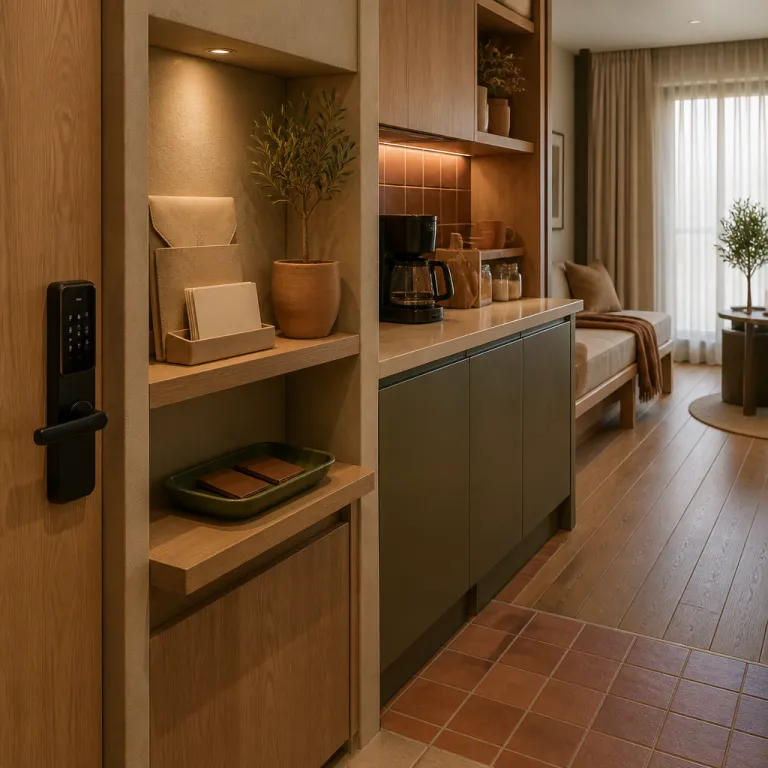
The self check-in condo stay experience for independent travelers
Why the self check-in condo stay experience suits independent travelers
You step out of the taxi, tap a smart lock, and you are home. The self check-in condo stay experience replaces the scripted lobby welcome with something quieter yet often more luxurious for the solo explorer. No queue, no front desk performance, just a clear arrival process and a private route from street door to living room.
For many guests, this shift from staffed reception to smart access is not a downgrade but the point of choosing a condo rental. Hotels worldwide report that tools like kiosks and apps allowing guests to manage their stay independently are now central to guest experience, and operators see that these self-service technologies in hotels are adopted to enhance guest experience and improve operational efficiency. When you book a high end apartment or condo, you are buying time and autonomy as much as a room with polished finishes.
Luxury condo hosts and professional property management teams now design every arrival step around clarity and trust. Before check in, you receive precise instructions, from how to find the correct door to where to store physical keys if smart locks fail. The best rental management companies treat access management as part of the stay’s design, not a back office task, and they often illustrate this with short case studies in their marketing materials.
Data from global hospitality platforms shows that a large majority of guests prefer some form of self-service, especially when arriving outside standard hours. Samsung Business Insights, for example, has reported that nearly three quarters of hotel guests are more likely to stay at a property that offers self-service technology, and Mews has highlighted that automated check in can cut lobby wait times by more than half. That aligns with what solo travelers report anecdotally; they want to check in without small talk, manage their own time, and feel like residents rather than visitors. In this context, the self check-in condo stay experience becomes a premium feature, not a compromise.
From lobby lines to smart locks: how premium condos handle access
In luxury condo hotels, the lobby is now mostly digital, living inside a mobile app instead of behind a marble front desk. Your booking confirmation usually includes a link to that app, where you see your access code, digital keys, and tailored arrival instructions. This is where the self check-in condo stay experience truly begins, long before you reach the building.
Behind the scenes, sophisticated management systems coordinate smart locks, access control, and guest profiles across multiple properties. Property management companies integrate smart access tools with rental management platforms so that when a host approves your booking, the system automatically generates time bound digital keys. These codes activate at check in time and expire at departure, reducing the need for physical keys and manual oversight.
For airbnb hosts operating more than one apartment, this integration is no longer optional. They rely on access management dashboards that show which guests are due to arrive, which smart locks are online, and whether any door has been left unsecured. When airbnb hosts manage several luxury units in the same building, a single mobile app can control every smart lock, simplifying both security and guest experience.
From the traveler’s perspective, the technology should feel almost invisible. You tap your phone, the door opens, and the living room lights are already on because the host has linked smart systems through careful management. In one Toronto condo hotel, for instance, a solo business traveler described arriving after midnight, entering with a temporary code, and finding the thermostat pre-set and welcome lights on, all triggered automatically at first entry. If you want to understand how this digital layer pairs with elevated on site amenities, explore our guide to refined restaurant experiences in luxury condo hotels, which shows how seamless access can coexist with high touch dining.
The trust exchange: codes, keys, and what guests expect in return
Handing a stranger the digital keys to your temporary home is a quiet act of trust. In a refined self check-in condo stay experience, that trust runs both ways; the host trusts you with smart access, and you trust that the rental matches the photographs and the promises. When this exchange works, both sides prefer it to the constant oversight of a traditional hotel corridor.
Luxury property management firms now treat access control as part of their brand identity. They combine smart locks with discreet physical keys stored in secure lockboxes, ensuring redundancy without cluttering the guest experience. Clear cancellation policy wording, transparent fees, and precise check instructions all reinforce the sense that this is a professional operation, not an improvised rental.
For solo travelers, this professionalism matters as much as thread count. You want to arrive at any hour, tap the smart lock, and step into a living room that feels curated rather than generic, with management systems quietly handling everything from cleaning schedules to late check outs. When airbnb hosts or condo operators manage multiple properties, consistent access management reassures guests that every room or apartment follows the same standards.
Of course, trust is tested when something goes wrong, such as a code that fails or a door that will not open. The best operators pair automation with a human backup, often a local host or concierge reachable by phone rather than only through an app. One Barcelona condo host, for example, keeps spare keys with a nearby café owner and notes this in the welcome guide, so guests know there is a real person who can help if the system fails. Well run condo hotels use integrated management systems that link booking platforms, access management tools, and communication channels so that support can step in quickly when needed.
When the concierge is an app: self-service done well and badly
Not every self check-in condo stay experience feels effortless. When the mobile app crashes, the smart locks lose power, or the access code never arrives, the absence of a front desk suddenly feels less like freedom and more like abandonment. This is where the difference between thoughtful management and bare minimum automation becomes obvious.
Well run condo hotels use integrated management systems that link booking platforms, access management tools, and communication channels. They send check instructions in stages, first at booking, then a reminder before arrival, and finally a real time message when your room or apartment is ready. If your flight is delayed, the system automatically adjusts the time window for your smart access, so you are not locked out at midnight.
Poorly managed rentals, by contrast, often rely on a single code sent once, with no backup plan. Guests arrive to find a dark door, no answer from the host, and no alternative to physical keys that may be stored kilometres away. For solo travelers, especially introverts who chose self-service to avoid social friction, this kind of failure can overshadow an otherwise great rental.
The most reliable operators blend automation with human judgment. They monitor smart lock activity, keep spare physical keys with a nearby partner, and maintain a clear cancellation policy in case access problems cannot be resolved quickly. If you are curious how these digital systems extend beyond access into every part of the stay, our analysis of a premium condo hotel booking app shows how messaging, payments, and service requests now live in the same ecosystem.
The solo explorer’s advantage: living like a local, not a guest
For the independent traveler, the self check-in condo stay experience removes a layer of performance from travel. You are not walking through a lobby in travel clothes, nodding at staff, or timing your arrival to match a check in window. Instead, you move through the city on your own schedule, knowing that your smart access will work whenever you return.
Inside the apartment, the layout matters more than any scripted welcome. A generous living room, a well equipped kitchen, and a quiet bedroom turn a rental into a temporary home, especially when management has thought about details like where to store luggage or how to adjust lighting. In this context, the absence of a front desk feels less like a missing service and more like an intentional design choice that prioritizes privacy.
Self-service technologies support this lifestyle by fading into the background. You use a mobile app to check the Wi-Fi code, extend your stay, or request a late check out without negotiating at a counter. Hotels are integrating self-service technologies to enhance guest experiences and operational efficiency, and data from Samsung Business Insights and Mews shows that a large majority of guests now prefer these options and that check in times can be reduced dramatically.
For solo explorers who value authenticity, this model aligns with how they already travel. They want to walk to the market in the morning, cook in their own kitchen, and slip back through the door at night without ceremony. When smart locks, clear check instructions, and responsive hosts all work together, the condo becomes less a rental and more a short term life in another city.
FAQ
What are self-service technologies in condo hotels ?
Self-service technologies in condo hotels include mobile apps for check in, smart locks for door access, and automated messaging systems that handle routine questions. These tools allow guests to manage their stay independently, from receiving digital keys to confirming their cancellation policy. They are designed to reduce wait times and streamline operations while maintaining a high level of guest experience.
Why are more luxury condos adopting self check-in systems ?
Luxury condos adopt self check-in systems because many guests prefer flexibility and privacy over traditional reception desks. Operators also benefit from improved management efficiency, as integrated systems handle access control, rental management, and communication across multiple properties. This combination of guest autonomy and operational control makes self-service attractive for both hosts and travelers.
Do self check-in options really reduce check in time ?
Self check-in options significantly reduce check in time because guests bypass queues and complete the process on their own devices. When booking data, access codes, and smart locks are connected through property management systems, the door can be ready the moment a guest arrives. Industry reports show that automated check in can cut waiting times by large margins compared with traditional front desk procedures.
What happens if a smart lock or access code fails ?
If a smart lock or access code fails, well managed properties provide clear backup options. These may include physical keys stored in secure lockboxes, a local contact who can assist on site, or a support line reachable at any time. Before booking, guests should check reviews for mentions of access problems and confirm that the host has contingency plans.
How can I prepare for a self check-in condo stay experience ?
To prepare for a self check-in condo stay experience, start by reading all check instructions carefully and saving them offline. Ensure your mobile device is charged, install any required mobile app, and confirm the exact address and entry door details. It is also wise to note the host’s emergency contact information in case connectivity issues prevent you from accessing digital keys or messages.